5/8″ or 3/4″? Does board thickness really matter when building a fence?

Choosing Between 5/8″ and 3/4″ Western Red Cedar Fence Boards: What’s Best for Your Project?

When it comes to building a fence, selecting the right material is crucial for durability, aesthetics, and overall value. Western red cedar is one of the most popular choices for fencing due to its natural beauty, resistance to decay, and long lifespan. However, when deciding between 5/8″ and 3/4″ thick fence boards, there are key differences that impact durability, cost, and performance over time. In this blog post, we’ll explore the pros and cons of each option so you can make an informed decision for your fencing project.


Understanding Western Red Cedar

Western red cedar is renowned for its deep reddish-brown hues, rich grain patterns, and natural resistance to rot, insects, and weathering. Unlike pressure-treated lumber, it doesn’t require chemical treatments to withstand outdoor elements, making it an environmentally friendly and aesthetically pleasing choice.

However, within western red cedar fencing, the thickness of the boards plays a significant role in performance, longevity, and overall value. Let’s break down the differences between the standard 5/8″ thick boards and the more robust 3/4″ boards.


5/8″ Western Red Cedar Fence Boards

Pros

More Affordable – One of the primary reasons homeowners and contractors opt for 5/8″ fence boards is the cost savings. These boards are typically more budget-friendly than 3/4″ boards while still offering many benefits of western red cedar.

Lightweight and Easier to Install – Because they are thinner, 5/8″ boards are lighter, making them easier to transport and install. This can be particularly beneficial for DIY projects where handling heavy materials might be a concern.

Aesthetic Appeal – 5/8″ boards still maintain the rich natural grain and color of western red cedar, providing an attractive fence that enhances curb appeal. They are available in a variety of grades, so you can choose a quality that fits your budget and design preferences.

Sufficient for Many Applications – If the fence is primarily for aesthetic purposes or light-duty privacy, 5/8″ boards provide a good balance of durability and cost-effectiveness.

Cons

Less Durable Over Time – The thinner profile of 5/8″ boards makes them more susceptible to warping, cupping, and splitting, especially in extreme weather conditions. Over time, they may require more maintenance to maintain their structural integrity.

More Prone to Gaps and Shrinkage – Wood naturally expands and contracts with changes in humidity and temperature. Thinner boards are more prone to shrinking, which can create small gaps in the fence over time.

Lower Resistance to Impact and Strong Winds – If you live in an area with high winds or frequent storms, 5/8″ boards may not hold up as well as thicker boards. They are more likely to flex and may break under extreme conditions.


3/4″ Western Red Cedar Fence Boards

Pros

Superior Durability and Strength – The extra thickness provides better resistance to warping, cupping, and cracking. This results in a longer lifespan and reduced maintenance over time.

Better Wind and Impact Resistance – Thicker boards offer greater structural integrity, making them a superior choice in regions prone to high winds, storms, or other harsh environmental factors.

Improved Longevity – With proper installation and maintenance, 3/4″ cedar fence boards will last longer than their thinner counterparts, making them a better long-term investment.

More Luxurious and Substantial Appearance – The added thickness gives the fence a more premium, sturdy look, which enhances the overall aesthetic appeal and perceived value of your property.

Cons

Higher Cost – The primary drawback of 3/4″ boards is the increased cost. The extra material means a higher price per board, which can add up quickly for larger fencing projects.

Heavier and More Labor-Intensive Installation – The additional weight makes these boards more difficult to handle, requiring more effort and sometimes additional support for proper installation. This can increase labor costs if hiring a contractor.

Limited Availability in Some Regions – While 5/8″ boards are widely available, 3/4″ boards may not be stocked in all lumber yards, requiring special orders or sourcing from specialty suppliers.


Which Thickness is Right for Your Project?

The decision between 5/8″ and 3/4″ western red cedar fence boards depends on several factors, including your budget, climate, intended fence lifespan, and aesthetic preferences.

Choose 5/8″ If:

  • You are looking for a more budget-friendly fencing option.
  • The fence is for decorative purposes or light-duty privacy.
  • You live in a moderate climate with minimal exposure to harsh elements.
  • You want a lightweight material that is easier to install.

Choose 3/4″ If:

  • You want a fence with maximum durability and longevity.
  • You live in an area with high winds, storms, or other harsh conditions.
  • You are willing to invest in a premium, longer-lasting fence.
  • A more substantial and luxurious aesthetic is a priority.

Why Choose Cedar Country Lumber for Your Fencing Project?

At Cedar Country Lumber, we specialize in providing high-quality western red cedar fence boards tailored to your specific project needs. As a project-based lumber supplier, we cater to each customer’s individual requirements, ensuring that every lumber package is customized and bundled accordingly.

Our Commitment to Quality and Convenience

  • Locally and Nationally Delivered – Whether you’re a homeowner looking to enhance your backyard or a contractor handling multiple projects, we offer delivery services to accommodate your location.
  • Sourced from the Best Mills – We work with trusted local mills in the Pacific Northwest and Canada to provide top-quality cedar lumber.
  • Competitive Pricing – Our pricing is highly competitive, ensuring that you get the best value for your investment.
  • Hassle-Free Shipping – We handle all shipping arrangements, making it easy for you to receive your materials without logistical worries.

By choosing Cedar Country Lumber, you ensure a seamless experience with premium materials, expert guidance, and unmatched customer service.


Final Thoughts: Balancing Cost, Durability, and Aesthetics

Both 5/8″ and 3/4″ western red cedar fence boards have their place in fencing projects, and the best choice ultimately depends on your priorities. If upfront cost and ease of installation are your primary concerns, 5/8″ boards are a great choice. However, if you’re looking for a fence that will stand the test of time with minimal maintenance, the extra investment in 3/4″ boards can be well worth it.

Regardless of the thickness you choose, proper installation, sealing, and routine maintenance will help extend the life of your fence. Western red cedar remains one of the best choices for fencing, offering natural beauty, durability, and value to your home. By understanding the key differences between 5/8″ and 3/4″ boards and choosing a trusted supplier like Cedar Country Lumber, you can confidently select the best option to meet your needs and enhance your outdoor space.

Western Red Cedar Split Rail Fencing

One of the oldest types of fencing, split railing fencing made from high-quality Western Red Cedar, is a popular and economical choice for defining property lines and other outdoor spaces and adding rustic beauty to the landscape.  Due to Western Red Cedar’s natural properties that resist rot and decay, as well as insect attack, Western Red Cedar split rail fences will last for many years with no maintenance.

Our Western Red Cedar split rail posts and rails are all individually split, peeled, and formed to expose the cedar’s natural color and grain.  Our split rail posts are pre-drilled for use as an end, corner, or line with either two or three holes to accommodate the rails.  Two rail posts will yield a fence with a finished height of roughly three feet, while the three rail post system provides a finished fence height of approximately four feet.

Split rail fencing end posts are drilled halfway through and are used as starting and stopping points in the fence.  Line posts are drilled all the way through to support rails on either side, while corner posts are drilled halfway through on adjoining sides to create right angles.

Western Red Cedar Split Rail Fence

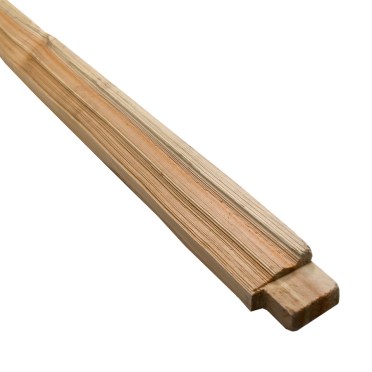
Cedar split rails can be used in conjunction with either the two rail or three rail system and have a tenon on each end to slide into the split rail post.

Western Red Cedar Split Rail Fence tenon end

If needed, in addition to “standard” sized rails, we offer Jumbo rails that are more beefier and average 12”+ in circumference.  Jumbo cedar split rails are available in 10’ lengths.  The standard cedar split rails are generally about 10” in circumference. They are available in 8’ or 10′ lengths.

Two hole split rail western red cedar fence

Out of all fencing types, Western Red Cedar split rail fencing is one of the easiest to install, making it a good project for homeowners.  Once the posts have been set, the ends of the rails slip easily in place.

How to install Western Red Cedar Split Rail Fencing

  1. Practice due diligence to ensure where you are planning to place your Western Red Cedar split rail fence is on your property and does not interfere with boundaries, underground utilities, or your neighbor’s property.
  1. Contact your local building department to discuss your local building codes and permitting requirements for your proposed new fence.
  1. Since the rails are pre-cut, layout the fence with those lengths in mind, however, since it is likely to not layout perfectly, consider either shortening the overall length of your fence or shortening the fence rails to create shorter sections at each end by cutting the rails and trimming the ends to fit into the pre-drilled holes on the post.
  1. Stake out your fence line and determine where each post will be placed by using the same measurement as your rails. The post’s center will be placed either 8’ or 10’ apart based on the length of rail you have chosen.
  1. Lay out the posts and rails along your line to ensure a correct fit before you begin digging holes. Adjust as necessary.  This can save time later on.  And a lot of digging.
  1. We suggest using a posthole digger to ensure that you can secure each Western Red Cedar split rail post into the ground securely. When digging your holes, plan for a clearance of at least six inches from the ground to the lowest rail.  Adding a layer of gravel to the bottom of each hole can help with drainage, especially in wet climates.
  1. Place your end and/or corner posts first, ensuring they are plumb and straight, then backfill. Next, connect each post with a string line.  This will help your fence stay straight as you dig holes and place your other cedar split rail posts along the line.
  1. Staying along your string line, dig holes for each cedar split rail post, set each post, and insert the split rails into each post while checking each post for plumb and alignment.  Then, fill each hole with soil and tamp firmly.

Western Red Cedar Split rail fencing for sale

Before your next project, be sure to visit us!

www.CedarCountryLumber.com

950 B Fountain Street, Burlington WA

360.757.6343

Alaskan Yellow Cedar Building Materials

Custom Milled Yellow Cedar T&G

In this photo – Custom Milled Alaskan Yellow Cedar T&G for a customer in New York

 A slow-growing tree found along the Pacific Coast from Oregon through Canada and up into Alaska, Alaskan Yellow Cedar trees can grow very tall, making it an ideal wood for large timbers used in timber frame construction.  It is also commonly referred to as Nootka Cypress.

Large Custom Cut Alaska Yellow Cedar Timbers

In this photo:  Custom Cut 8×8″ x 30′ long Alaskan Yellow Cedar Timber

We ship very large Alaskan Yellow Cedar Timbers anywhere in the US.

In this photo:  The 8×8″ x 30′ long Alaskan Yellow Cedar Timber is being loaded on to a flatbed truck for transport to our customer in upstate New York

Highly aromatic and slightly harder than Western Red Cedar, Alaskan Yellow Cedar is an excellent choice for most building applications where a lighter-hued wood is desired. Naturally resistant to rot and decay with good dimensional stability and workability, Alaskan Yellow Cedar is readily available in decking, custom and standard siding patterns, shingles, shakes, and dimensional lumber.

Custom Milled Yellow Cedar T&G

In this photo – Custom Milled Alaskan Yellow Cedar T&G for a customer in New York

We are pleased to share this photo collection with you where our Alaskan Yellow Cedar dimensional boards were used to make a stunning fence in the Seattle area. This beautiful fence will provide years of service and beauty to this customer’s property.

These awesome photos were shared with us, along with this quote
“We are so excited about the cedar. It is BEAUTIFUL” ~ Erika

Alaskan Yellow Cedar Boards Used for Fencing

Yellow Cedar Fencing

ayc-fence

Before your next project, be sure to visit us!  We ship nationwide!

http://www.CedarCountryLumber.com

950 B Fountain Street ~ Burlington, WA

Toll-Free 866.757.6343

Western Red Cedar Fence Board Grades

Day after day, we receive inquiries for the price of fence boards. Unlike traditional lumber yards and box home improvement stores, when a call like that is received at our shop, our staff provides a price for a Western Red Cedar fence board as well as the grade. In many cases, the person who is inquiring about the price does not have a clear understanding of what the grading means and may compare pricing of products from various sources that are not equal.

Imagine calling around to different restaurants and asking for the price of “cheeseburger”.  While it is called the same thing at a fast-food restaurant, as well as at a nice family restaurant, the “cheeseburger” at each location will be of different quality, and the pricing would reflect that. You would not purchase a cheeseburger based solely on price while not taking into consideration the quality, so therefore, you should not select a fence board based strictly on price either.

While there is no regulation or standards for “cheeseburgers”, there are established standards for fence boards that have been developed by the National Lumber Grades Authority, as well as the West Coast Lumber Inspection Bureau. It is important to note that “fence grade” is below knotty or clear grades of Western Red Cedar and should not be compared to the quality or held at the same standard as lumber in those grades.

The West Coast Lumber Inspection Bureau divides Western Red Cedar Fence Boards into three basic categories. Any grade may be rough or surfaced, Air Dried, Kiln Dried or “green”. Grade is determined by the best face.

No. 1 Fencing “Select”

  • Checks and Pinholes are not limited
  • Shakes are “Fine”
  • Skips are “hit and miss”, splits are “short”
  • Knots are sound and tight
  • Spike Knots can be approximately 1/2 face width or equivalent
  • Tolerance of 1/16″ over or under in thickness, width may vary along the piece of 1/8″, but not to exceed 20% of the pieces

1

Quality “No Hole” Western Red Cedar Fencing

No. 2 Fencing “Quality”

  • Checks and Pinholes are not limited
  • Shakes are “fine”
  • Skips are “hit and miss”, splits are “medium”
  • Wane can be 1/2 thickness as well as 1/3 width
  • There can be small spots or streaks of unsound wood
  • White speck not limited
  • There may be some knots that are not firmly fixed or are unsound but may not exceed 1/3 the width of the board
  • Spike Knots can be 3/4 of the face width
  • Maximum 1″ holes with 4 per foot allowed, unless “No Hole” is specified
  • Same tolerance of thickness and width as Select Fencing

This is a great example of our No. 2 Select “No Hole” Fencing, which is the standard fence board we supply unless otherwise specified. This particular fence is made from 3/4″ net thick material that the customer made a custom, decorative top cut to.

This is a great example of our No. 2 Select “No Hole” Fencing, which is the standard fence board we supply unless otherwise specified. This particular fence is made from 3/4″ net thick material that the customer made a custom, decorative top cut to.

No. 3 Fencing “Rustic”

  • Lumber of this grade is suitable for low grade and permits all characteristics which do not interfere with the use of the piece
  • Thickness can be 3/16″ over or under invoiced thickness
  • Edge skips can not exceed 1/4″
  • Variation on width should not exceed 1/2″

We do not generally carry any No. 3 fencing or any fencing that allows for holes. On the off chance we have some, or order this product in for a particular order, we do not allow returns or exchanges on ANY No. 3 fencing, as the pricing reflects the quality of the material of the whole order.

no 3 fencing

No. 3 Western Red Cedar Fence Boards

GLOSSARY as provided by The West Coast Lumber Inspection Bureau
Shake – A lengthwise separation of the wood that occurs between or through the annual growth rings

  • “Light” or “Fine” Shake is not over 1/32″ wide
  • “Medium” Shake is not over 1/8″ wide
  • “Surface” Shake occurs on only one surface of the piece
  • Shake should not be confused with bark seams

Split – A separation of the wood through the piece of the opposite surface or to an adjoining surface due to the tearing apart of the wood cells.

  • “Very Short” is equal in length to 1/2 of the width of the piece
  • “Short” is equal in length to the width of the piece and does not exceed 1/6 the length
  • “Medium” is equal in length to twice the width of the piece and does not exceed 1/6 the length
  • “Long” is longer than a medium

Skips – Occurs during milling when the board is too thin in an area to reach the planer blades, thus resulting in a rough spot

Wane – Bark or lack of wood from any cause, except eased edges, on the edge or corner of a piece of lumber

Before your next project, be sure to visit us!

www.CedarCountryLumber.com

We Ship Nationwide!

360.757.643