Western Red Cedar vs. Alaska Yellow Cedar: Which One is Right for Your Project?

If you’re planning an outdoor project—maybe a new deck, a fresh fence, or even some siding—you’ve probably come across two popular wood options: Western Red Cedar (WRC) and Alaska Yellow Cedar (AYC). Both are fantastic choices, known for their durability and natural beauty, but they each have their own strengths. So, how do you decide which one is best for your home improvement project? Let’s break it down in a way that makes sense for DIYers and homeowners like you.

What Do They Look Like?

Western Red Cedar has that classic, warm, reddish-brown color—think cozy mountain cabin vibes. It can range from a light honey tone to a deep reddish hue, giving decks and fences a naturally rich appearance. Over time, if left untreated, it ages to a silvery-gray, which can add a nice rustic charm.

Alaska Yellow Cedar, on the other hand, is more of a pale yellow to golden tone and has a very uniform color. It’s got a smooth and fine grain, making it look a bit more polished and refined. Just like Western Red Cedar, it will turn silver-gray if left exposed to the elements.

Which One Lasts Longer?

Both woods are naturally resistant to rot, decay, and pesky insects, making them great for outdoor projects.

  • Western Red Cedar has natural oils and tannins that help protect it from moisture and fungal growth. That’s why it’s a go-to choice for decking, fencing, and siding—especially in damp climates.
  • Alaska Yellow Cedar is actually not a true cedar but part of the cypress family. It’s denser and harder than Western Red Cedar, meaning it’s even more durable. This makes it a top pick for heavy-duty projects like boat building, bridge decking, and high-traffic areas.

Which One is Easier to Work With?

  • Western Red Cedar is lightweight and easy to cut, nail, and screw, making it super DIY-friendly. Plus, it takes stain and finishes really well, so you can customize the look however you want.
  • Alaska Yellow Cedar is harder and denser, so while it’s more durable, it can be trickier to work with—especially if you’re using basic tools. But on the plus side, its fine grain makes it perfect for detailed woodworking projects, and it holds paint and stains beautifully.

Is One More Eco-Friendly?

Both woods are sustainably harvested, especially when sourced from responsibly managed forests.

  • Western Red Cedar mainly comes from the Pacific Northwest (think British Columbia and the U.S. West Coast). Many suppliers follow sustainable forestry practices to keep these forests healthy.
  • Alaska Yellow Cedar grows in coastal Alaska and British Columbia, but it takes longer to mature, making it a bit rarer. However, its long lifespan helps offset its slow growth, since you won’t need to replace it as often.

At Cedar Country Lumber, we source both Western Red Cedar and Alaska Yellow Cedar directly from mills in the Pacific Northwest and British Columbia. We ensure that our products come from sustainable and high-quality sources so you get the best materials for your project. Plus, we deliver locally and ship nationwide, making it easy to get the perfect cedar for your build no matter where you are!

How Do They Compare in Price?

Cost is always a big factor when choosing materials.

  • Western Red Cedar is more widely available and comes in different grades, from high-end, clear boards to more rustic, knotty options. This means you can usually find something that fits your budget.
  • Alaska Yellow Cedar is a bit pricier because it’s denser and less abundant. But if you need a super-durable wood that can handle tough conditions, it might be worth the extra investment.

Best Uses for Each Wood Type

So, which one should you pick? Here’s a quick breakdown of the best uses for each.

Western Red Cedar Is Great For:

✔️ Decking – Warm, beautiful, and naturally weather-resistant. ✔️ Siding – Adds character and provides insulation. ✔️ Fencing – Lightweight and easy to install. ✔️ Pergolas & Outdoor Structures – Enhances patios and gardens with natural charm. ✔️ Shingles & Roofing – A classic choice for traditional homes.

Alaska Yellow Cedar Works Best For:

✔️ Boat Building – Super moisture-resistant, ideal for marine projects. ✔️ Bridge Decking & Heavy-Duty Builds – Handles wear and tear like a champ. ✔️ Outdoor Furniture – Long-lasting and resistant to weathering. ✔️ Carvings & Millwork – Fine grain makes it perfect for detailed work. ✔️ Roof Shakes & Shingles – Holds up incredibly well in extreme weather.

So, Which One Should You Choose?

It really depends on what you’re looking for.

  • Go with Western Red Cedar if you want something that’s beautiful, easy to work with, and cost-effective. It’s perfect for most standard outdoor projects like decking, fencing, and siding.
  • Choose Alaska Yellow Cedar if you need something tougher and longer-lasting, especially for high-traffic or heavy-duty projects. It’s a great option if you’re willing to invest a little more upfront for longevity.

Both types of cedar offer stunning natural beauty and excellent performance, so you really can’t go wrong. Hopefully, this breakdown helps you decide which one is the best fit for your next project. Need help sourcing your cedar? Cedar Country Lumber has you covered—we deliver locally and ship nationwide! Happy building!

5/8″ or 3/4″? Does board thickness really matter when building a fence?

Choosing Between 5/8″ and 3/4″ Western Red Cedar Fence Boards: What’s Best for Your Project?

When it comes to building a fence, selecting the right material is crucial for durability, aesthetics, and overall value. Western red cedar is one of the most popular choices for fencing due to its natural beauty, resistance to decay, and long lifespan. However, when deciding between 5/8″ and 3/4″ thick fence boards, there are key differences that impact durability, cost, and performance over time. In this blog post, we’ll explore the pros and cons of each option so you can make an informed decision for your fencing project.


Understanding Western Red Cedar

Western red cedar is renowned for its deep reddish-brown hues, rich grain patterns, and natural resistance to rot, insects, and weathering. Unlike pressure-treated lumber, it doesn’t require chemical treatments to withstand outdoor elements, making it an environmentally friendly and aesthetically pleasing choice.

However, within western red cedar fencing, the thickness of the boards plays a significant role in performance, longevity, and overall value. Let’s break down the differences between the standard 5/8″ thick boards and the more robust 3/4″ boards.


5/8″ Western Red Cedar Fence Boards

Pros

More Affordable – One of the primary reasons homeowners and contractors opt for 5/8″ fence boards is the cost savings. These boards are typically more budget-friendly than 3/4″ boards while still offering many benefits of western red cedar.

Lightweight and Easier to Install – Because they are thinner, 5/8″ boards are lighter, making them easier to transport and install. This can be particularly beneficial for DIY projects where handling heavy materials might be a concern.

Aesthetic Appeal – 5/8″ boards still maintain the rich natural grain and color of western red cedar, providing an attractive fence that enhances curb appeal. They are available in a variety of grades, so you can choose a quality that fits your budget and design preferences.

Sufficient for Many Applications – If the fence is primarily for aesthetic purposes or light-duty privacy, 5/8″ boards provide a good balance of durability and cost-effectiveness.

Cons

Less Durable Over Time – The thinner profile of 5/8″ boards makes them more susceptible to warping, cupping, and splitting, especially in extreme weather conditions. Over time, they may require more maintenance to maintain their structural integrity.

More Prone to Gaps and Shrinkage – Wood naturally expands and contracts with changes in humidity and temperature. Thinner boards are more prone to shrinking, which can create small gaps in the fence over time.

Lower Resistance to Impact and Strong Winds – If you live in an area with high winds or frequent storms, 5/8″ boards may not hold up as well as thicker boards. They are more likely to flex and may break under extreme conditions.


3/4″ Western Red Cedar Fence Boards

Pros

Superior Durability and Strength – The extra thickness provides better resistance to warping, cupping, and cracking. This results in a longer lifespan and reduced maintenance over time.

Better Wind and Impact Resistance – Thicker boards offer greater structural integrity, making them a superior choice in regions prone to high winds, storms, or other harsh environmental factors.

Improved Longevity – With proper installation and maintenance, 3/4″ cedar fence boards will last longer than their thinner counterparts, making them a better long-term investment.

More Luxurious and Substantial Appearance – The added thickness gives the fence a more premium, sturdy look, which enhances the overall aesthetic appeal and perceived value of your property.

Cons

Higher Cost – The primary drawback of 3/4″ boards is the increased cost. The extra material means a higher price per board, which can add up quickly for larger fencing projects.

Heavier and More Labor-Intensive Installation – The additional weight makes these boards more difficult to handle, requiring more effort and sometimes additional support for proper installation. This can increase labor costs if hiring a contractor.

Limited Availability in Some Regions – While 5/8″ boards are widely available, 3/4″ boards may not be stocked in all lumber yards, requiring special orders or sourcing from specialty suppliers.


Which Thickness is Right for Your Project?

The decision between 5/8″ and 3/4″ western red cedar fence boards depends on several factors, including your budget, climate, intended fence lifespan, and aesthetic preferences.

Choose 5/8″ If:

  • You are looking for a more budget-friendly fencing option.
  • The fence is for decorative purposes or light-duty privacy.
  • You live in a moderate climate with minimal exposure to harsh elements.
  • You want a lightweight material that is easier to install.

Choose 3/4″ If:

  • You want a fence with maximum durability and longevity.
  • You live in an area with high winds, storms, or other harsh conditions.
  • You are willing to invest in a premium, longer-lasting fence.
  • A more substantial and luxurious aesthetic is a priority.

Why Choose Cedar Country Lumber for Your Fencing Project?

At Cedar Country Lumber, we specialize in providing high-quality western red cedar fence boards tailored to your specific project needs. As a project-based lumber supplier, we cater to each customer’s individual requirements, ensuring that every lumber package is customized and bundled accordingly.

Our Commitment to Quality and Convenience

  • Locally and Nationally Delivered – Whether you’re a homeowner looking to enhance your backyard or a contractor handling multiple projects, we offer delivery services to accommodate your location.
  • Sourced from the Best Mills – We work with trusted local mills in the Pacific Northwest and Canada to provide top-quality cedar lumber.
  • Competitive Pricing – Our pricing is highly competitive, ensuring that you get the best value for your investment.
  • Hassle-Free Shipping – We handle all shipping arrangements, making it easy for you to receive your materials without logistical worries.

By choosing Cedar Country Lumber, you ensure a seamless experience with premium materials, expert guidance, and unmatched customer service.


Final Thoughts: Balancing Cost, Durability, and Aesthetics

Both 5/8″ and 3/4″ western red cedar fence boards have their place in fencing projects, and the best choice ultimately depends on your priorities. If upfront cost and ease of installation are your primary concerns, 5/8″ boards are a great choice. However, if you’re looking for a fence that will stand the test of time with minimal maintenance, the extra investment in 3/4″ boards can be well worth it.

Regardless of the thickness you choose, proper installation, sealing, and routine maintenance will help extend the life of your fence. Western red cedar remains one of the best choices for fencing, offering natural beauty, durability, and value to your home. By understanding the key differences between 5/8″ and 3/4″ boards and choosing a trusted supplier like Cedar Country Lumber, you can confidently select the best option to meet your needs and enhance your outdoor space.

Cedar Shake Re-Roof at Mule Peak Fire Lookout

After the Great Fire of 1910 that burned millions of acres of forest land in Washington, Idaho, and Montana, the U.S. Forest Service began to create policies regarding fire suppression, as well explore better ways to detect fires, including the construction of fire lookouts. In 1933 when President Franklin D. Roosevelt formed the Civilian Conservation Corps, the U.S. Forest Service was able to take advantage of the CCC workforce and initiated a massive program of construction projects, including fire lookout towers.

Due to the abundance of material, as well as low maintenance, and natural resistance to rot and insect attack, fire lookouts through out the Pacific Northwest were originally constructed using Western Red Cedar building materials. An especially popular choice for these structures was Western Red Cedar shake roofing.

We recently had the pleasure of providing 24″ #1 Medium Western Red Cedar Shakes for the restoration of the fire look out on Mule Peak, located in Oregon. Accessible only by foot or pack animal, our friends at Kaplan Homes Unlimited, mounted horses and made the 4,000 foot elevation gain up to the lookout to complete the roof restoration. Please enjoy these photos of their trip.

Accessible only by foot or pack animal, Kaplan Homes mounted horses and carried the Western Red Cedar shakes needed to re-roof the fire lookout at Mule Peak
Western Red Cedar shakes are being installed to preserve the fire lookout at Mule Peak
The fire lookout at Mule Peak with a new Western Red Cedar shake roof

What an adventure!

Because of our unique business model, we are often contacted to help with historical restorations, such as this.  We also provide high quality Western Red Cedar, Alaska Yellow Cedar, and other soft and hardwood building materials for residential, commercial, government, and municipal projects throughout the United States. We go the extra mile to make sure our customers get exactly what they need. Before your next project, be sure to visit us! We ship nationwide!

360.757.6343

950 B Fountain Street, Burlington WA

www.ccLumber.com

Thermally Modified Hemlock T&G

This all natural, American-made natural wood product does not absorb moisture, expand, contract, warp, or become a food source for insects. By using high heat to remove the organic compounds from the Hemlock, this beautiful wood can be used indoors or out without the worry of rot, decay, insect attack, or harmful chemicals.

Using high heat, Hemlock is thermally modified to last longer

Naturally light and uniform in color, this thermally modified Hemlock will accept any stain, which makes it totally customizable for both interior or exterior use. And because the thermal modification process reduces cupping and warping, this product is a dream to install and lays straight and flat.

~~All at a price that is less than similar grade (C&Btr VG) Western Red Cedar~~

By thermally modifying this Hemlock, it is extremely stable and impervious to insects

Readily Available by Special Order ~ Thermally Modified Hemlock T&G

  • 1×4″ and 1×6″ Tongue and Groove
  • C&Btr, vertical grain
  • Kiln dried
  • Reversible re-sawn, 1/8″ fine-line face / finish ready texture 1/8″
  • 6′ to 20′ random length, odd and evens
  • Stainless steel fasteners are recommended for installation
  • Generally available within one week

Also Available for Special Order ~ Thermally Modified Hemlock

  • Lead times vary
  • C&BTR Vertical Grain, Kiln Dried
  • 1×4″ and 1×6″, 2×4″ and 2×6″ S1S2E for Trim
  • 2×4″ and 2×6″ Tongue and Groove
  • Shiplap and Custom Patterns

Contact us for samples and pricing. We ship nationwide!

360.757.6343

950 B Fountain Street, Burlington, WA

www.cclumber.com

Properly Storing Your Western Red Cedar Lumber and Other Building Materials

Congratulations on the next step in your project!  Now that you have selected your materials and they have arrived at your job site, the very first step is to inspect everything to be sure you have received the correct products and they are free from any defects or damage. Should you have any questions or concerns, please contact us.

Western Red Cedar timbers being assembled for a job site delivery by Cedar Country Lumber

If you will not be installing your building material products right away, it is imperative that they are stored properly, otherwise they can be damaged quite quickly by moisture, humidity, temperature, sunlight, and job site dirt. Any materials that are intended to be installed indoors, need to get out of elements as quickly as possible. Building materials that will be installed outdoors, can remain outside for a short time as long as they are stored properly out of direct sunlight.

Starting from the bottom, your stack of lumber or other building materials should never be stored directly on the ground for any length of time, so be sure to elevate them by placing pieces of scrap lumber or pallets underneath. Should you be storing your lumber over damp ground or freshly poured concrete, you must also put a moisture barrier down. Cedar siding or other “dry” building materials should be kept between 4 to 6” above the ground. Be sure that your pile is laying completely flat.

If large pieces of lumber are strapped together and you will be using them with in a short time period, go ahead and keep them banded together for stability. This is especially helpful when storing pressure treated lumber, as it has a tendency to twist and warp quite quickly when stored outdoors. Items like cedar siding and trim, should be separated and stacked on vertically aligned stickers to allow for airflow and to acclimate before installation.  

Next, cover your building materials with a waterproof tarp or plastic, but not too tightly. You do want to allow some airflow.  To help prevent cupping and to hold down your tarp, you may want to put weights on your lumber pile. Having a peak or covering your pile with a tent in case of rain is also a good idea. Should any of your building materials become wet on the job site, they should be separated and allowed to dry thoroughly before installation.

Following these tips for short-term storage of your Western Red Cedar and other building materials will help your job go a lot smoother, as well as save you time and money!

360.757.6343

www.ccLumber.com

Gypsy Wagon Restoration

Also known as a Gypsy Wagon, or quite simply a living wagon, a vardo was a horse-drawn wagon used by British Romanichal Travels as their home during the mid-1800s. Vardos were highly decorated, intricately carved, and painted and were viewed as woodworking masterpieces.

Starting with a vintage Gypsy Wagon chassis, our customer has been in the process of creating this vardo using our clear Western Red Cedar. Due to its lightweight, ease of workability, and availability, Western Red Cedar is a popular choice for mobile buildings, wagons, and the like.

Please enjoy these in-progress photos and be sure to check back for updates! They will be outfitting the interior of the vardo much like it was done back in the 1800s with heavy fabrics and great attention to detail.

Vintage Covered Wagon Restoration
The interior of the vardo will be outfitted with luxury fabrics and other fine details
A horse drawn Gypsy Wagon made from high quality clear Western Red Cedar

Before your next project, be sure to visit us! We ship our specialty building materials to homeowner and contractors nationwide!

360.757.6343

950 B Fountain Street, Burlington, WA 98233

http://www.cedarcountrylumber.com

1×4 Clear Mahogany Tongue and Groove Paneling

We are pleased to offer a new product to our line-up this spring, 1×4” clear grade KAYU® Mahogany T&G. Whether your style is traditional, coastal, modern, or farmhouse, adding natural wood accents to your home is hot on the market right now.

This 1×4” clear Mahogany T&G may be used as siding, in exterior porch ceiling or soffit areas, as well as interior walls and ceilings. It is the same beautiful tropical hardwood that has been used in the yachting and boating industry for many years where beauty and performance are of upmost importance.

1x4 clear Mahogany T&G for exterior soffits and ceilings
Our Clear Mahogany T&G is the same wood that has been used for many years in the boat building industry
Photos courtesy of Bob N. of Lynden

Naturally resistant to rot, decay, insects and mold, these solid pieces of wood can be installed vertically, horizontally, diagonally or in any combination. This wood is harvested sustainably from renewable resources and can be repurposed or completely recycled when it has fulfilled its intended use.

1x4 Clear Grade Mahogany T&G is a great value

All this at an excellent value compared to similar clear grade woods and/or composite materials. Contact us for pricing. In stock and ready to deliver!

360.757.6343

950 B Fountain Street, Burlington WA

We ship nationwide!

http://www.cedarcountrylumber.com

Modified Wood Building Materials

Nothing warms a space like real wood. It provides natural beauty that just can’t be duplicated. However, as we all know, it does have its drawbacks, which has opened the doors for science and innovation to enter. New to the marketplace and likely to only gain popularity, as the technology evolves are modified wood building materials.

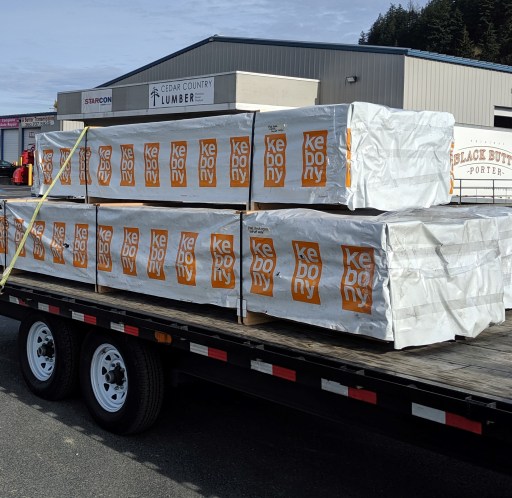
Kebony modified wood products give fast growing softwoods hardwood characteristics for extreme durability and stability
Kebony Channel Siding

Using proprietary methods to modify the wood structure with the use of thermal and/or non-toxic chemical agents, fast growing woods like ash, pine, sycamore and poplar, are turned into extremely durable, long lasting exterior building materials. And like other natural wood building products, at the end of their original intended use, they can be repurposed or recycled, leading to zero waste.

These amazing new modified wood products are being found in commercial, as well as residential construction, all over the world. However, distribution seems to be a drawback.

Due to a patented process of modifying softwoods, Kebony products are extremely durable. Distributed by Cedar Country Lumber

At this time we are pleased to offer Kebony products by special order. Developed in Norway, Kebony has created a patented process using bio-based liquid that enhances the properties of sustainable softwoods to provide them with hardwood characteristics, such as extreme durability and stability. Refined and beautiful, Kebony modified wood products are backed with a 30-year outdoor warranty. They offer products for decking, cladding and millwork. Learn more HERE

Kebony decking provided by Cedar Country Lumber of Burlington, WA
Decking by Kebony, Photo and Craftsmanship by The Robbins Co

As the technology and interest in modified wood building products progresses, we fully expect many more players coming to the marketplace, as well as greater availability. We’ll keep you posted!

Before your next project, be sure to visit us! We ship nationwide.

360.757.6343

950 B Fountain Street, Burlington WA

http://www.ccLumber.com

Cedar Country Lumber In The News

It has been a pretty exciting January around here! We have had the pleasure of being featured in two publications; the 2021 Community Report for Peoples Bank and the Winter Issue of Premier Builder Magazine – Seattle/Puget Sound Edition.

We are extremely grateful for the support of these two organizations, as well as all our customers, vendors, colleagues, family and friends. When running a small business, every bit of help along the way helps!

Kym Kelly of Cedar Country Lumber on the front cover of the People's Bank 2021 Community Report
Tom Kelly of Cedar Country Lumber
Read the full story HERE
Cedar Country Lumber reports on the pro's of using Alaska Yellow Cedar in today's construction projects

Before your next project, be sure to visit us! We ship nationwide!

360.757.6343

950 B Fountain Street, Burlington WA 98233

www.ccLumber.com

Best Wood for Your Sauna

You guessed it: Western Red Cedar

Due to the phenols and other natural properties of Western Red Cedar against rot and decay, it is great for use in damp areas, including bathrooms and saunas. It is also very flexible and resists warping under heat and humidity. Because it is a low-density wood, it is a great insulator and heats quickly. And, it smells great!

Clear Western Red Cedar is the ideal wood choice for use in saunas

Pro tips:

Because your sauna will reach high temperatures and cool off when not in use, the Cedar will expand and contract a great deal. To reduce the chance of cupping, we recommend using narrower dimensions of materials, such as a 4” tongue and groove (T&G) product for the walls for optimum stability.  And while knotty grades are easier on the pocketbook, we recommend using clear grades of materials, as the knots tend to heat up faster and get hotter and may become uncomfortable to the touch. 

When shopping for your materials, keep in mind, that because a sauna is generally a small space, shorter lengths of materials can be used and sometimes come with a discounted price.

Narrower dimensions of Western Red Cedar is our recommendation for using in saunas to reduce cupping and warping

Special “Thanks” for Michael S from Arizona for sharing these gorgeous photos of the Western Red Cedar sauna he built using materials he purchased from us.

We ship nationwide!

360.757.6343

950 B Fountain Street, Burlington WA