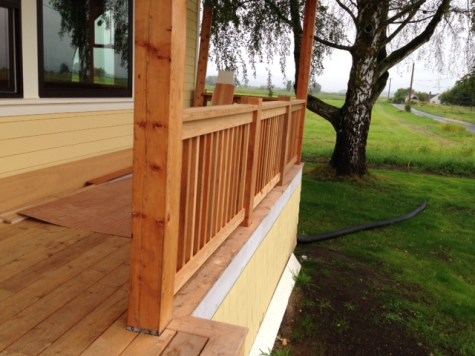
Ipe Decking

Ipê (pronounced E-pay) originates from countries in Central and South America and is harvested from responsibly managed forests. Ipe has natural properties that make it one of the toughest and longest-lasting decking materials available.

Also known as Brazilian Walnut and sold under proprietary names, such as Iron Wood, Ipe decking is highly prized for its unique properties, including shear strength and natural beauty. With its extremely dense and tight grain, its rich brown, red and amber hues naturally resist wear, rot, splintering, termites, fire, chemicals, and virtually every other threat imaginable. Due to the wood’s fine texture and interlocking grain, which can be wavy or straight, Ipe offers superior slip resistance, making it ideal for decks and boardwalks.

Comparison Chart of Hardwood Decking, Composite and Cedar Decking

Perfect for residential or commercial applications, an outdoor finish, such as Penofin Hardwood Formula, can be periodically applied to maintain the decking’s rich natural color or left unsealed to weather to a handsome silver patina with no ill effects.   Because Ipe is so naturally strong, dense, and hard, even high traffic areas will remain splinter-free for years, even if the decking is left untreated.

Ipe decking naturally resists wear, rot, splintering, pests, fire and virtually every other threat imaginable

Before your next project, be sure to visit us!

We Ship Nationwide!

www.CedarCountryLumber.com

Toll-Free 866.757.6343

Why Choose Wood Building Materials?

Environmental Benefits of Using Wood in Construction 

GO GREEN……..USE WOOD
“One of the best ways to address climate change is to use more wood, not less. Every wood substitute – including steel, plastic, and cement – requires far
more energy to produce than lumber.”
– Dr. Patrick Moore, co-founder of Greenpeace.

Western Red Cedar Blocks

  • Wood is the only 100% renewable resource in the manufacturing of building materials.
  • Wood is the only naturally recyclable and biodegradable building material.
  • Wood has the lowest environmental impact compared to other building products such as steel, concrete, tile, vinyl siding, fiber cement siding, and stucco.
  • Wood products require less embodied energy. This is the energy used in the extraction, production, and transportation of the resource.
  • Wood products require little to no fossil fuels (a non-renewable resource) to produce.
  • Wood products produce less air pollution.
  • Wood products produce less water pollution.
  • Wood products generate fewer greenhouse gases.
  • Wood reduces carbon emissions, while concrete and steel increase carbon emissions.Western Red Cedar Trees Being Harvested
  • Carbon Dioxide (CO2) is considered a contributor to Global Warming – young and mature trees reduce CO2 from the atmosphere.
  • Wood products are better insulators in homes and buildings, which reduces the energy consumption in both heating and cooling, making it the most energy-efficient material.
  • Wood building materials are 400 times better at insulating than steel and 15 times better than concrete.
  • Wood products produce less solid waste – both in the manufacturing of the products and at construction sites. There is virtually no waste in manufacturing wood products.
  • Wood products generate fewer greenhouse gases. Wood reduces carbon emissions, while concrete and steel increase carbon emissions.
  • Wood products have the lowest ecological resource use index. This means that while trees are harvested, the effects are only short-term as reforestation follows. Other products have long-term effects as their resources are non-renewable, i.e., petroleum for plastic and ore used in steel and aluminum siding. Once these non-renewable resources are gone, they cannot be replaced. The trees themselves are produced naturally through solar energy.
  • Wood can be reused and recycled with very little additional energy. Concrete cannot be re-used in the same form but can be downcycled to aggregate with a lot of additional energy expended.

Old Growth Western Red Cedar stumps being harvested

  • No other building product is more environmentally friendly than wood, as demonstrated in “ATHENA’s life cycle assessment” research and study. From the growing of the tree to the disposal of the wood products, wood has a minimal environmental footprint.  Non-renewable products such as steel, aluminum, and concrete use up to 250% more fossil fuel energy from the production to disposal vs. wood.

Before Your Next Project, Be Sure to Visit Us!

We Ship Nationwide!

www.CedarCountryLumber.com

360.757.6343

Western Red Cedar cants being transported for milling

We want to acknowledge and thank the following sources for the information provided:

Teal Jones Group

Coast Forest and Lumber Association

Canadian Lumbermen’s Association

The Athena Institute

The Wood Users Guide to Green Building

Custom Powder Coated Aluminum Railing Systems

Perfect for residential and commercial applications, Western ClearView powder-coated aluminum railings are built to withstand harsh environmental conditions and are designed for modern living at an affordable price.  With dozens of combinations of glass, picket, and stainless steel cable in a variety of colors to choose from, the right look for your project is just a quote away.

To help ensure you have exactly all the components you need, at all the right lengths and angles, we will have a ClearView representative field measure your project before your railing is quoted for FREE (limited to the location of the project). All railing systems are available with either surface or fascia mount posts and installation hardware and are backed with a 10-year manufacturer’s limited warranty.

Each color is powder-coated onto the aluminum using an ionic bond process, making it much more durable and long-lasting than conventional painted rails. For the Powder Coat Warranty to remain intact, the railing system is to be washed and rinsed with fresh water at least two times per year.

Powder Coated Aluminum Railing Available Colors

Available in a wide variety of colors, our powder-coated railing systems will complement almost any architectural style or color

Picket Railing System

The most conventional railing, this system is sturdy and dependable with clean and elegant lines. Available with standard 1-5/8” Square Pickets, 1-1/2” Slat Pickets or Basket Pickets which contain a 2” bow in the middle of the picket.

white powder coated aluminum railing system

Welded Picket Railing System

The easiest and quickest to install, the welded panels provide more strength than component pickets. It is also the most economic aluminum powder-coated rail system we offer. The welded picket panels can span up to 8 feet between posts (for a 36” tall system) saving even more time and money by not having to buy or install as many posts.

aluminum powder coated railing

Glass Railing System

The most popular railing, this system provides sturdy construction with a completely unobstructed view of your surroundings. The top and bottom channels can also accept pickets if a mix of the two styles is desired. The glass can be clear, tinted, or obscured and can be custom cut for stairs or other custom applications.

Glass Panel Custom Coated Railing System is perfect when an unobstructed view is desired

Self Cleaning Glass

We can provide a “Green” environmentally safe coating for any of these ClearView Railing products that VIRTUALLY ELIMINATES THE NEED FOR CLEANING! This revolutionary technology only requires Sunlight and Water (rain) to activate its process of destroying and washing away organic materials from the surface.

  • Glazing stays cleaner longer. For touchup cleaning use only vinegar and water.
  • TIO2 Nano-Technology accelerates the continuous photo-catalytic breakdown of any organic compounds.
  • The resulting Hydrophilic action causes water to sheet on the surface and rinse away the decomposed dirt from the surface more efficiently.
  • The glass surface dries more quickly with minimal spotting and streaking.
  • No unsightly tint or reflective surface.
  • Reduces dew formation and collection on the glass surface, as well as UV transmittance.
  • Factory-applied to new Western ClearView railing glass
  • FDA and EPA approved.
  • Safe for humans and pets.
  • Continues to work for 5-8 years.

For project inspiration, as well as installation instructions and warranty information, please visit ClearView website by clicking HERE

Before your next project, be sure to visit us

www.CedarCountryLumber.com

We Ship Nationwide!

360.757.6343

Fire Treating Western Red Cedar and Doug Fir Building Materials

To help with your peace of mind, we are happy to offer custom fire treating to our Western Red Cedar or Douglas Fir products through our partner, CHEMCO. CHEMCO was one of the early pioneers in fire retardant technologies and became the only producer of fire-resistant wood roofing allowed for sale in California. CHEMCO uses Thermex-FR, a safe and environmentally friendly fire treatment formula that renders wood resistant to fire.

Products treated using CHEMCO’s proprietary fire retardant system have passed strict fire and weathering tests and comply with all building codes. However, we recommend checking with your building department to ensure compliance with your local regulations. The effectiveness of this fire retardant is proven by an independent laboratory and quality-control testing and verified by real-world stories in which it was subjected to both structural and wild fire scenarios.

Fire Treated clear, vertical Western Red Cedar Siding

The clear Western Red Cedar was fire treated prior to installation on this stunning Malibu, CA home

The process of fire retarding is done by using a vacuum-pressure impregnation to remove moisture and air from the wood cells and replace it with Thermex-FR. Next, the wood is cured in a kiln to lock the fire retardant into the cells. This process significantly increases fire protection for residential and commercial buildings without sacrificing the natural beauty of the wood.

To sustain fire, you need three main ingredients ~ Fuel, Heat, and Oxygen.  THERMEX-FR suppresses all three elements

1) Fuel: An intumescing foam is produced to protect the surface of the wood.

2) Heat: Intumescing foam insulates the wood, absorbing heat endothermically and surface
temperature drops below what is required for combustion.

3) Oxygen: A non-combustible gas is generated to dilute the amount of oxygen in the air around the flame.

Q: What is the difference between “fire-resistant” and “fireproof”?

A: All materials are vulnerable to fire damage, so the term “fireproof” is technically incorrect for any product. Nevertheless, engineers and fire technicians have developed tests to compare the fire-resistant properties of different materials. Products treated with Thermex-FR have proven themselves consistently on all such tests.

Q: What makes fire-resistant wood treatment last?

A: The patented fire-resistant formula bonds to the interior structure of the wood during a vacuum-impregnated treatment process. The result is fire protection that lasts for the useful life of the wood product itself.

Q: Are fire-resistant products hazardous to the environment?

A: No. Fire-treated wood products are composed of all-natural elements, and they are not toxic to the environment.

Q: Will my fire retardant-treated wood products have to be re-treated?

A: No. Fire retardant products never need to be re-treated. The unique formula that is used during processing at the facility is thermally cured in dry kilns. Upon reaching the right temperature, the treatment is bonded to the wood and is no longer water-soluble.

Q: What are the typical applications for fire retardant treated lumber and plywood products?

A: Lumber and plywood that have been treated with fire retardant are intended for above-ground exterior use. These include exterior decks and balconies, stairways, covered walkways, siding, molding and trim, soffits and fascia, open-air roof systems, stables, scaffolding, and construction staging.

Q: What wood species and sizes are available to have fire treated?

A: Douglas Fir, Southern Yellow Pine, and Western Red Cedar. All common sizes and most
construction species of lumber and plywood can be treated by Thermex-FR, including Shingles and Shakes, Exterior Siding, Soffit, Fascia, Decking, Timbers and Beams, Trim, and Interior Paneling.

Q: Does the fire treatment meet building codes?

A: Yes. These products meet the performance requirements of most local building codes. However, we suggest checking with your local agency to ensure compliance.

Q: Is there any reduction in strength compared to untreated wood?

A: Yes. The treating and drying processes may cause a slight reduction in strength that varies according to treatment, wood species, specific properties, and applications.

Q: Can these fire retardant products be used in ground contact?

A: Fire retardant treated Western Red Cedar and/or Douglas Fir is intended for exterior, above-ground uses only.

Q: Is it okay to cut wood that has been treated with fire retardant?

A: Yes. Cutting lengths, drilling holes, and light sanding are all permissible. It is not necessary to field-treat cut ends in order to maintain the flame spread rating.

Q: What types of fasteners should be used with fire-treated products?

A: Hot-dipped galvanized or stainless steel hardware is recommended, as the FRX wood treatment could increase the corrosion of bare steel.

Q: Why should I put fire-resistant shakes on my roof when I live in a relatively wet
climate?

A: No matter where you live, there always exists the danger of an errant firework or a flying ember from the burn pile of a neighboring home. When it comes to protecting your home, there is no such thing as playing too safe.

Care & Maintenance of Building Materials that have been Fire Treated

Fire-retardant lumber and plywood can be coated with a paint or stain, but caution should be taken in choosing the right product, as not all products will adhere to the unique finish. Shakes and shingles that have been treated with fire retardants should not have any additional coatings applied.

For warranty and other important information, including MSDS Sheets, please visit the Chemco website by clicking HERE

Before your next project, be sure to visit us!

We Ship Nationwide!

www.CedarCountryLumber.com

950 B Fountain Street, Burlington, WA

General Guidelines for Installing Western Red Cedar Siding

Like all natural materials, Western Red Cedar responds to the environment; Cedar siding can swell or shrink to reach equilibrium with the surrounding air’s moisture content. By acclimating your Cedar siding prior to installation and by following these essential installation tips, your Western Red Cedar siding will provide many years of service ~ naturally!

Kiln Dried “Clears” have been dried (to approximately 12% moisture content) at the mill and are the most “ready to use” of all Western Red Cedar siding products and may be installed upon arrival, except in very hot and dry environments, or if wet. If the siding has gotten wet, it should be separated and allowed to dry completely before installation. In hot and dry environments, we recommend allowing the siding to acclimate for a good 3 to 5 days before installing.

Dry “Knotty” Sidings should be allowed to acclimate in most environments for 7 to 10 days before installation. In damp or high humidity environments, more time may be required for acclimation.

To acclimate your Western Red Cedar (or Alaskan Yellow Cedar) siding, stack pieces individually on evenly spaced vertically aligned “stickers” in a dry storage area, off the ground, and under cover. Air should be circulating all around the pieces of Cedar siding.  Unseasoned or “green” Cedar sidings that have not been dried with a moisture content exceeding 12% prior to delivery will require much longer to acclimate to their surrounding environment.

Narrower widths of channel, bevel, and board and batten sidings allow for shrinkage when supplied without prior drying. Acclimation of green siding products can take 30 days or longer depending on the environment. Store the stack by separating the pieces with vertically aligned stickers in a well ventilated, dry location off the ground by at least 4”. If it is to be stored over damp ground or new concrete, place a moisture barrier under the siding.

After your Western Red Cedar Siding has acclimated, a coating of primer, stain or oil should be applied to all surfaces, including the ends. The type of coating will vary depending on the final finish desired. If a solid color stain or paint will be used, an alkyd oil stain-blocking primer should be used as the first coat, applied on all four sides. Always follow the manufacturers’ recommendations to ensure the product you have selected is for use on Western Red (or Alaskan Yellow) Cedar and compatible with the intended finish coat.

To save money and time on the job site, we can arrange to have your Western Red Cedar siding coated with a product of your choice. Your siding will be completely covered on all four sides with a flood coat in a temperature-controlled environment, free of dust and debris, then back brushed to ensure even absorption and coverage. This quality of pre-finish is impossible to duplicate using on-site installation methods. Read more about the process HERE

Custom Milled Western Red Cedar Log Cabin Siding Pre-stained with Penetrating Oil

Stud walls generally require no special preparation when installing horizontal siding. The Cedar siding should be nailed into the studs at a maximum of 24-inch centers when applied over a wood-based, solid sheathing.  When installing vertical siding over stud walls, horizontal blockers are needed and should be spaced not exceeding 24 inches on center.

Walls made of masonry will require furring strips that are thick enough for nail penetration of 1-1/4” into sold wood with a ring shank nail.  Using rigid foam sheathing as a nailing base for Western Red Cedar Siding is generally not recommended and should only be done in compliance with the manufacturer’s recommendations.  Proper wall construction includes the use of gas permeable building paper and vapor barriers.  Always check your local code to verify all building requirements.

Stainless steel nails are the best choice for installing Western Red Cedar siding, especially if the siding is to be finished with transparent or semi-transparent stain. No. 304 grade is fine for general siding applications, while No. 316 grade stainless should be used when installing near saltwater. Alternatively, hot-dipped galvanized nails that are corrosion resistant can be used.  Other types of fasteners are not recommended.

Prior to installing your Western Red Cedar Siding, make sure that corrosion-resistant flashing is properly installed to prevent moisture from entering wall and roof spaces above doors and windows, at the junctions of dormer walls and roof surfaces, and along the transition of siding materials such as cedar to brick or stucco.

Keep the lowest edge of your Western Red Cedar Siding at least 6” off the ground, and treat the end grain of the bottom of vertical siding with a water repellent preservative or primer.  Caulking is to be used where the ends of your siding contact vertical openings or trim. Use only non-hardening caulks such as polyurethane, polysulfide, terpolymer rubber, acrylic, or acrylic silicone.  Always follow the manufacturer’s recommendations.

For tips on installing specific siding profiles, please visit our friends at the Western Red Cedar Lumber Association by clicking HERE

How to Install Western Red Cedar Siding

Before your next project, be sure to visit us!
We Ship Nationwide!

www.CedarCountryLumber.com

ph 360.757.6343

950 B Fountain St, Burlington, WA 98233

Choosing the Right Fasteners for Your Construction Project

One of the most important, and often overlooked, elements to building a quality project is selecting the correct fasteners for the job. All fastening products are designed and tested for particular applications and environments for optimum performance. Proper product installation requires the end user to pay close attention to all manufacturer’s instructions.  Failure to do so may result in failure of the product and void any warranties.Stainless Steel Fasteners should be used when installing wood in damp environments, such as bathrooms

Fasteners should be selected based on the environment, as well as by size, length, thread, head, coating, material, and point. It is essential to not exceed a manufacturer’s published load. Doing so can jeopardize the connection. A fastener that splits the wood will not carry a published load, so, if this a problem, consider pre-drilling.

All carbon steel-based fasteners have the potential to corrode and rust. Careful consideration must be made when to select corrosion resistant fasteners.

Generally speaking, corrosion-resistant fasteners should be used when there may be exposure to condensation or other sources of moisture, as well as when the fasteners might be exposed to fumes, fertilizers, soil, pressure treated wood, acid rain, or other corrosive materials or wood, including Western Red Cedar and Alaskan Yellow Cedar.

Use care when selecting fastners when building Western Red Cedar Raised Garden Beds

Corrosion Resistance Recommendations

  • Low – Phosphate (grey, black), Clear (bright) Zinc, Heavy Electro-galvanized, Yellow Zinc, Electro coat, Type 410 Stainless Steel
  • Medium – Mechanically Galvanized, Hot-dip galvanized, Double Barrier Coating
  • High – 304 or 305 Stainless Steel
  • Severe – Type 316 Stainless Steel

When installing Western Red Cedar, Alaskan Yellow Cedar or other woods that may cause corrosion, we suggest using 304 or 305 Stainless Steel fasteners in accordance with the manufacturer’s recommendations. Additionally, if the project is near the saltwater, 316 Stainless Steel is highly recommended.

Use 316 Grade Stainless Steel Screws and Nails when near saltwater for proper corrosion protectionphoto and craftsmanship by Soundecks of Anacortes, WA

Should you have questions regarding selecting the right fasteners for your project, our team of professionals would be happy to help. We stock a various screws and nails in both galvanized and 305 Stainless Steel and can easily special order items in 316 Stainless.

Before your next project, be sure to visit us!
We Ship Nationwide!

www.CedarCountryLumber.com

360.757.6343

Grades of Western Red Cedar

Throughout the wood industry, specific standards have been set so that there is consistency in grading when Western Red Cedar, as well as other lumber, is manufactured, as well as bought and sold. For the general consumer, this can be somewhat confusing.  Generally speaking, the higher the grade, the higher the price. So, when selecting and pricing lumber, it is vital to know the grade of material being purchased and how it is best used. Alaska Yellow Cedar is also graded similarly.

Clear, Western Red Cedar Timbers are used for an entry support

Here is an overview of the characteristics that determine the grades of Western Red Cedar:

Clear Western Red Cedar

  • Clear, Vertical Grain – This is the highest grade of Western Red Cedar and is commonly just referred to as “VG”. Vertical grain means that the growth rings are parallel to each other on the face of the board, and the wood is sawn specifically to achieve that look. Pieces have a smooth face of decay-resistant heartwood and are free from growth characteristics that affect appearance. Pieces have excellent dimensional stability and the ability to hold finishes very well. Generally used in siding and paneling products, but also found in trim and other dimensional boards; this product is generally supplied Kiln Dried and is ready to accept paint or stain either before installation or after.

Clear, Vertical Grain Western Red Cedar Siding

Clear, Vertical Grain Western Red Cedar Siding

  • Clear Heart – Includes only pieces with heartwood on the exposed face. Many of the pieces of Western Red Cedar are completely clear; others have minor imperfections that do not detract from their fine appearance. This product is also generally supplied Kiln Dried and would be ready to accept paint or stain.
  • A Clear – This is a fine appearance grade that allows only slightly more growth
    characteristics than Clear Heart. It is commonly referred to as A&Btr. Pieces are of mixed grain. These mixed grain (vertical and flat) pieces are graded from the surfaced face and typically sold with a percentage of B grade. A few small, sound tight knots or pin knots are allowed.

Clear, Mixed Grain Western Red Cedar

Clear, Mixed Grain Western Red Cedar

  • C&Btr Clear – High quality lumber for use where appearance is important, but permits more numerous characteristics than Clear Heart or “A” Grades. In addition to interior and exterior trim, as well as exterior cladding, Western Red Cedar of this grade is also used for cabinetry, doors, windows and similar applications. 4 knots per 12’ of each board is allowable.
  • No 2 & Better – The grade generally assigned for Western Red Cedar timbers and beams when the finest quality rough lumber is desired. The Cedar lumber is sound, well manufactured, and its characteristics do not detract from the wood’s fine appearance.

Clear No 2 Export Grade Western Red Cedar Timbers

  • D & Better Clear – This grade permits more natural characteristics and is used where general utility is more important than appearance. More pin knots and tight knots are allowed than within the other Clear Grades of Western Red Cedar. This grade is widely accepted in the construction of landscape structures and exposed timber framing, and is commonly used for arbors, pergolas, large trellises and porticos. Some pieces may require trimming to yield lengths for intended uses, and cutouts to remove less desirable portions can be common.
  • Rustic – Generally a grade of Clear Western Red Cedar Bevel Siding or cladding, it is recommended for use as sidewall covering where the distinctive charm of a rustic saw textured appearance is desired. This grade allows limited characteristics that do not detract from serviceability and may include pieces too thin to manufacture to standard sizes. Pieces may contain up to 4 sound, tight knots per 12’ of board and pin holes may be present.

Knotty Western Red Cedar

  • Select Knotty – Knots and other natural features define the visual characteristics of the Western Red Cedar. All knots are sound and tight. Red Cedar Lumber products are available rough surfaced, kiln-dried or unseasoned and smooth or with a re-sawn texture. Some companies may supply this grade of Western Red Cedar with knots glued on the reverse face and there is typically a percentage of Quality Knotty included in an order.

Knotty Western Red Cedar Siding

Select Knotty Western Red Cedar

  • Quality Knotty – Similar to Select Knotty, but a few small scattered holes are allowed, the grain may be heavily raised, and checks are not limited. Pieces must be serviceable, but 10% waste per board is allowed and is considered with the price of the material is set.  Because of this, a product in this grade is sold “as is” and returns or exchanges are generally not allowed.
  • Proprietary, Appearance or “Custom” Knotty – These products are graded to the manufacturer’s specifications to meet the intended end use. This is something that is commonly seen in the Cedar decking market as well as in large timbers for outdoor structures.  Boards often represent good value for appearances and uses with no holes. Allowances do vary based on manufacturer set standards and pricing is set accordingly. Less expensive materials would allow more waste, knots, and checking; while higher priced material would generally be of better quality. Depending on product, returns and exchanges may not be allowed.

Knotty Western Red Cedar Decking and Appearance Grade Cedar Timber

  • No. 2 and Better Structural – This grade is evaluated on structural characteristics, rather than appearance.
  •  Standard & Better Beams, Posts and Timbers – These items are intended for general construction use where serviceability is more important than appearance. No structural values are assigned. Most of the material will be box heart, meaning the timber is taken from the center of the Cedar tree and is less stable.  There may be oversized or missing knots, rot pockets, wane on edges and corners, and loose or course grain.  Items may be supplied surfaced (S4S) or with a re-sawn texture.

Please note, these grading standards do not apply to Western Red Cedar Fencing.  For information on grades of Fence materials, please click HERE

Western Red Cedar and Douglas Fir Lumber for Sales. We ship nationwide!

Before your next project, be sure to visit us!  Our team will be happy to discuss your individual project and make recommendations for the grade of Western Red Cedar to use, assist you with the correct amount of material to order, as well as provide you with installation tips.

We ship top quality Western Red Cedar lumber and building materials nationwide at competitive prices!

www.CedarCountryLumber.com

Ph 360.757.6343

950 B Fountain Street, Burlington WA  98233

Custom Pre-Staining Services

Looking to save time and money on the job site, as well as protect your siding, trim boards, shingles, shakes, wood decking or Cedar fencing? We can arrange to have your products pre-stained at the factory and delivered to your job site ready to install.

custom pre-stained interior Western Red Cedar paneling

With nearly every color imaginable, from clear products that allow the natural characteristics and colors of the wood to show through, to semi-transparent stains that add a subtle hue, to solid color coatings, the quality of the finish is impossible to duplicate using on-site installation methods. Your material will be completely covered on all sides with a flood coat of stain, in a temperature-controlled environment, free of dust and debris, then back brushed to ensure even absorption and coverage.

The pieces are then placed on racks in a drying room until cured.

Custom Pre-staining of your lumber will save time and money on the job site

In this photo, custom cut Western Red Cedar Airfoils are being individually coated with a penetrating oil

pre-stained air foils drying after coating

The Western Red Cedar Airfoils are left to dry completely in a drying room before packing up for shipment

No waiting for perfect weather! No over-spray, uneven application, or streaking! Having your materials coated prior to coming to the job site will help them stay cleaner, as well as help protect them during installation.

And save you money!

Stain absorption may vary due to the density and/or porosity of the Western Red Cedar or other wood fibers. The final color and how it adheres/absorbs into the material will vary. Due to this, color matches are not guaranteed to match any previous sample or order exactly.

A second field coat of finish following installation is required.

Generally, your order will be ready to ship in 10 to 14 days, ready for installation. To get the order going, we do require a deposit at the time the order is placed. Sorry, we cannot cancel a custom order once it has been placed.

Custom Stained Western Red Cedar Tight Knot Siding

For more information, please call us at 360.757.6343 to discuss.

Before your next project, be sure to visit us!

www.CedarCountryLumber.com

Deck Installation Tips

If you haven’t already, please be sure to visit our previous blog, Tips for Designing Your Dream Deck. Once you have determined the deck you want to build, here are some tips to help you get closer to having the deck of your dreams!

#1 – Before You Do ANYTHING else, contact your local Building Department to discuss what permitting is required and what you will need to do in order to obtain a permit, such as drawings, fees, etc. Next, contact your utility companies to ensure no lines will be disturbed or disrupted.

deck part identification chart by DIY Technologies

Figuring Your Materials

After you determined your joist spacing and size, deck height, and footing requirements (see Designing Your Dream Deck if you need help with this), put your framing package list together. Be sure to include a count of corrosion-resistant fasteners, including all the joist hangers, post bases, post to beam to connectors, as well as any flashing that is needed.

All deck framing should be Ground Contact Pressure-Treated material with a minimum ACQ rating 0.40 pcf.

Decking needed per 100 square feet (includes 5% waste)

  • 4” product – 320 lineal feet
  • 6” product – 210 linear feet

Determining the correct number of fasteners will vary based on the decking selected and joist spacing. When face screwing (or nailing) a 6” product down on framing that is 16” on center, you will need approximately 350 screws per 100 square feet, and approximately 480 screws per 100 square feet with the same 16” on center joist framing for 4” material, when using two screws per joist. For other types of fasteners, refer to the manufacturer’s recommendations.

If you have selected to use Western Red Cedar as your decking, now is the right time to
determine what product you will use to help protect the wood. We recommend using good quality penetrating oil product with mold and mildew inhibitors, as well as UV protection, such as Ultra Premium Red Label Penofin. This should be applied to all four sides of the decking before installation for optimum results.

If you have selected an exotic hardwood for your decking, such as Red Balau “Mahogany” or Ipe, you can either choose to apply a penetrating oil to the wood to help it maintain its beautiful color prior to installation (all four sides is recommended), or if you wish for it to simply weather to a beautiful silvery – grey, you can skip this step.

Red Balau Mahogany Decking

Other Items Needed

  • Chalk Line
  • Circular Saw
  • Concrete
  • Hammer
  • Crescent Wrench
  • Drill and Bits
  • Dust Mask
  • Extension Cord
  • Framing Square
  • Gloves
  • Hearing Protection
  • Hand Saw
  • Hoe & Hose (to mix concrete)
  • Ladder
  • Level
  • Nail Set
  • Pencil
  • Pick
  • Plumb Bob
  • Post Hole Digger
  • Ruler
  • Safety Glasses
  • Screwdrivers
  • Shims
  • Shovel
  • Socket Wrench
  • String
  • Tape Measure
  • Tool Belt
  • Wheelbarrow

Getting Ready to Build

Once your materials have arrived on the job site, keep them covered when not in use to keep them clean, as well as to prevent twisting and warping, especially when it is hot or under direct sunlight. They should also not be stored directly on the ground, as they will absorb moisture.

Framing Tips

When framing your new deck, be sure to allow for proper water drainage. A deck should angle away from the structure a minimum of 1/8” for every 8 feet to reduce the possibility of standing water. In general, a deck should be installed 18” off the ground for proper airflow (or as specified by the decking manufacturer) to provide adequate ventilation to minimize cupping and warping of the deck top.

It is advised to wear gloves while handling pressure treated materials and to always use ear and eye protection when sawing, drilling or cutting wood. Leftover scraps of pressure-treated materials should be disposed of properly. Never burn them.

Install the ledger to the house. This will provide stability to the deck. Use string to find your footings and to ensure your deck is square. Remove the sod and dig your footings for the posts.  Post holes should be at least 24” deep or up to 4’ deep, depending on the frost line in your area, as well as the height of the column.

Install your perimeter posts, then attach your beams to your posts. Attach braces to any posts over 5’ high. Next, layout your joists and install them using either joist hangers or by toenailing. Add blocking between your joists to minimize warping.

Decking Tips

When installing the deck top, be sure to allow for adequate gaps between boards. This provides ventilation, as well as room for water to drain away. Inadequate gap space between boards puts additional strain on the fasteners and can cause broken screws or nail pops. Avoid over-driving any fasteners.

Laying out decking

When face screwing any hardwood decking, pre-drilling is recommended; as well as when screwing or nailing close to the edge of any wood board to minimize splitting.  Allow small gaps between butt joints to allow the material to expand and contract during weather changes.

Measure once, cut twice!

Our team of experts are available to assist you with questions regarding product selection and materials.

timbertech decking

Before your next project, be sure to visit us!

950 B Fountain Street, Burlington, WA

360.757.6343

www.CedarCountryLumber.com

We Ship Nationwide!